

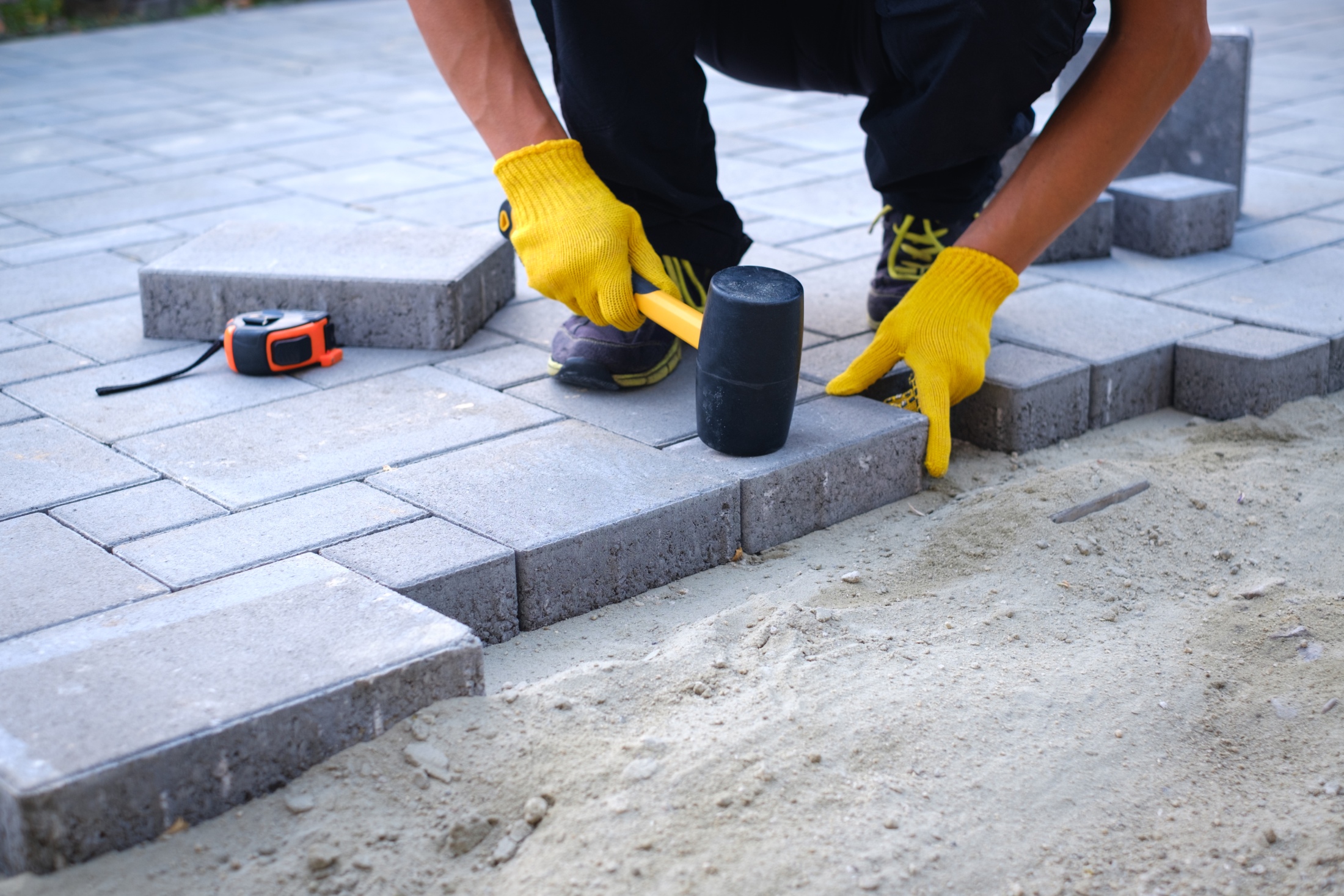
The Structural Importance of Proper Base Preparation in Paver Patio Installation
Why excavation depth and compaction determine long term durability
Every patio failure story starts the same way. The surface looked great. The pavers were beautiful. The project seemed done. Then a winter passed, or two winters, and suddenly there were dips where there shouldn’t be dips, joints that opened up, sections that felt soft underfoot. The pavers weren’t the problem. They never are. The problem was always what happened before the first paver went down.
Base preparation is the part of hardscape construction that nobody photographs. There’s no impressive before-and-after of a well-compacted aggregate layer. No one posts pictures of excavation depth. But everything about how patio pavers or driveway pavers perform over five, ten, twenty years traces back to what was done at this stage. Get it right and the surface holds. Rush it and the surface tells on you eventually.
Proper excavation starts by removing unstable soil and organic material that would shift, compress, or decompose under load and weather cycles. Replacing that with compacted aggregate gives the base actual structural capacity rather than just something for pavers to sit on. Each lift of base material gets mechanically compacted to drive out air pockets and create density. Not once. Each lift. Shortcuts here don’t show up immediately. They show up two winters later when you’re watching a section of your patio slowly sink.
The depth required isn’t one-size-fits-all. Pavers for walkways with pedestrian traffic need a different structural profile than surfaces bearing vehicle loads. Soil conditions vary property to property. A sandy subgrade behaves differently under load than dense clay. The excavation depth and base specification have to reflect the actual conditions on that actual site, not a generic number someone found online.
Even retaining wall performance connects back to base preparation. A concrete retaining wall or backyard retaining wall built on a properly prepared sub base stays put. The forces behind it are managed. The wall reinforces the patio rather than contributing to movement over time. Build it on inadequate footing and the wall and the patio both suffer for it.
Preventing settling, drainage issues, and premature patio failure
Settling is sneaky. It doesn’t announce itself. It builds over months and seasons in the voids that got left behind when compaction was rushed. Traffic compresses those gaps gradually. Freeze thaw cycles work on them over winter. Then one day the patio has dips and uneven joints and the homeowner wonders what happened to the surface that looked perfectly level a year ago.
It happened underground. Brick patio pavers and patio stone pavers sitting on a compromised base show the same failure pattern regardless of how premium the material is. The surface is only as stable as what’s underneath it and if what’s underneath it was never properly consolidated the outcome is just a matter of time.
Drainage deserves its own serious conversation. A base that moves water away from the structure is a base that performs through freeze thaw cycles. A base that holds water is a base that’s slowly being weakened from underneath every time the temperature drops below freezing. That’s especially true in New Jersey where winters aren’t gentle and the soil goes through repeated freeze and thaw stress all season long. A fire pit patio with poor drainage underneath it doesn’t just look bad when water pools near the feature. It’s actively degrading the subgrade and shortening the useful life of everything built on top of it.
The same goes for outdoor patio kitchens built into the patio. Heavy, permanent structures built on an inadequate base are asking for cracking and shifting as the ground moves. An outdoor fireplace or masonry fireplace constructed without precise grading and compacted aggregate beneath it may look flawless at installation and start showing stress fractures as the base settles unevenly. There’s no repair for that problem that doesn’t involve going back to the foundation. Which costs far more than doing the foundation correctly the first time.
Engineering principles behind long lasting hardscape construction
There are real engineering principles at work in a properly built patio and understanding them at a basic level helps explain why the process looks the way it does and why shortcuts have the consequences they do.
Load distribution is the foundational concept. The base layer spreads weight across a broad area so no single point gets overstressed. Think about what a patio carries. Furniture, people, entertaining setups, and often overhead structures too. A patio pergola, aluminum pergola, or custom pergola adds load to the surface it’s anchored to. A base built to proper specifications handles all of that without transferring excessive stress to any one area. A base that wasn’t properly compacted concentrates that load at weak spots and those spots give way.
Edge restraint is the piece that holds the perimeter together over time. Without secure borders containing the paver field, individual units can migrate laterally. Even slightly. Over multiple seasons that slight movement becomes visible misalignment, open joints, and surface irregularity that keeps getting worse rather than stabilizing. Proper edge restraint is what keeps the work done during installation from slowly undoing itself in the years after.
The bedding layer above the aggregate base has its own requirements. It has to be screeded to a consistent, even surface so every paver is uniformly supported from the moment it goes down. Variations in the bedding layer become variations in the finished surface. A paver that’s not fully supported on all four sides flexes under load, which compromises the joint and eventually the paver itself.
Every one of these steps is invisible in the finished product. The surface looks the same whether the base was built correctly or not. For a while. Then the difference shows up and it shows up in a way that’s expensive to fix. A patio built on a properly excavated, layered, compacted, and drained foundation doesn’t just look good. It stays looking good and performing correctly for a genuinely long time. That’s what the investment in proper base preparation actually buys.
Frequently Asked Questions
How deep should the base be for a residential paver patio?
It varies based on soil conditions and what the surface needs to support. Most residential patio installations require several inches of compacted aggregate beneath the pavers but heavier loads, poor native soil conditions, or challenging drainage situations can push that deeper. The right number comes from evaluating the actual site, not applying a standard spec to every project regardless of conditions.
What happens if a patio base is not compacted correctly?
It settles. Not right away, which is part of what makes it frustrating. The surface looks fine at installation and then dips, shifting joints, and uneven sections start appearing over the next year or two as traffic and weather compress the voids that compaction should have eliminated. By the time it’s visibly wrong the repairs are significantly more involved than the correct compaction would have been.
Why is drainage planning included in base preparation?
Because water sitting under a patio is doing damage even when you can’t see it. It weakens the subgrade, creates conditions for frost heaving in cold weather, and accelerates the settling process. Managing runoff so water moves away from the base rather than through it is what protects the structure through real weather over a long timeframe.
Can existing soil ever serve as a proper base?
Rarely. Native soil almost never provides the stability, drainage characteristics, and compaction density that hardscape requires. In most cases it gets excavated and replaced with engineered aggregate specifically designed to compact well and maintain its density under load. How much native soil stays and how much gets replaced depends on the specific conditions of the site.
How does professional installation extend patio lifespan?
Experienced installers know where projects fail and they build to prevent it. Proper grading so drainage works. Correct excavation depth for the actual soil conditions. Mechanical compaction done in lifts rather than all at once. Edge restraint installed to contain the paver field. Bedding screeded to a consistent surface. All of those details add up to a patio that holds up the way it’s supposed to for a long time rather than one that starts showing problems in a few seasons.