

Fire Pits vs. Outdoor Fireplaces: Which Is Right for Your Backyard?
Comparing space requirements, design styles, and usability
Fire pits and outdoor fireplaces both anchor outdoor gathering spaces with warmth and visual appeal, but they create fundamentally different environments. Fire pits are lower profile, integrate naturally into patio layouts, and encourage conversation in all directions. Outdoor fireplaces are vertical architectural features that define a focal point and create a more formal, intimate seating orientation. Choosing between them depends on how much space is available, how you entertain, and what role the fire feature plays in the overall hardscape design.
Everybody wants fire in their backyard. The harder question is what kind, and it matters more than most people realize before they start planning. A backyard fire pit and an outdoor fireplace both deliver warmth and that pull-people-outside energy, but they create completely different experiences, take up space differently, and send different design signals.
Fire pits are lower profile. They tuck into a patio naturally, integrate cleanly into patio pavers or a dedicated fire pit patio layout, and don’t demand the architectural commitment that a fireplace does. You can build one that feels like it was always part of the hardscape rather than something added later.
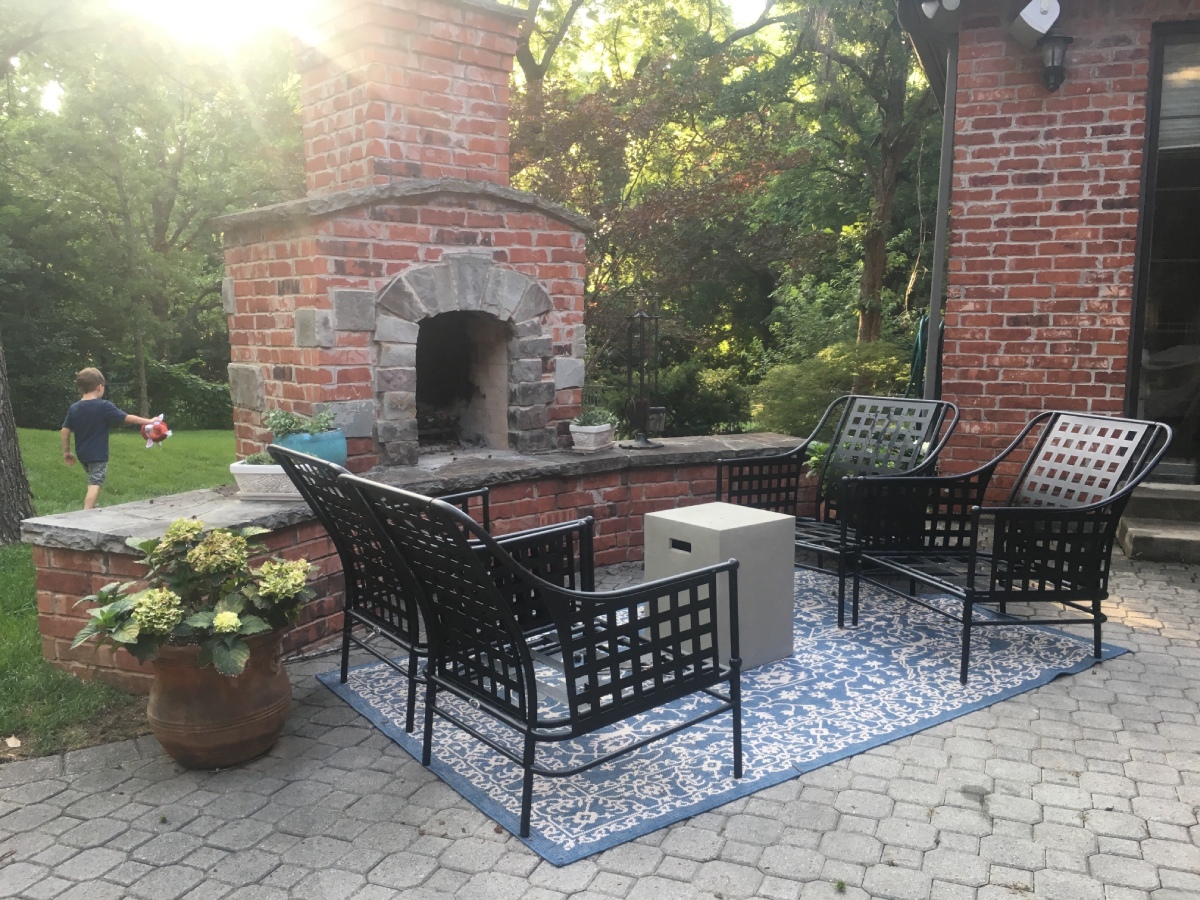
An outdoor fireplace is a statement. It’s vertical, it’s structural, and when it’s built right with stone or brick and finished as a masonry fireplace, it anchors the entire seating area. People know where the focal point is. There’s no ambiguity. The tradeoff is footprint and positioning. A fireplace needs room and it needs to be placed deliberately within patio designs with pavers so it doesn’t crowd everything else.
Usability is the other piece. Fire pits pull seating into a circle and conversation flows in every direction. Fireplaces orient people the same way, toward the fire, more intimate, more directed. Neither is wrong. They’re just different. What you pair them with, pavers for patio surfaces and pavers for walkways connecting the space to the rest of the yard, matters for how the whole gathering area comes together.
| Feature | Backyard Fire Pit | Outdoor Fireplace |
| Footprint | Compact, low profile | Larger, vertical structure required |
| Seating orientation | 360 degrees, social circle | Facing forward, more directed |
| Design style | Casual, flexible | Formal, architectural anchor |
| Heat distribution | Radiates in all directions | Projects forward toward seating |
| Space requirement | Works in smaller patios | Needs larger dedicated zone |
| Permit complexity | Generally simpler | Often requires structural review |
Safety, ventilation, and placement considerations explained
Every fire feature installation starts with a safety assessment. For fire pits, that means confirmed clearance from structures and overhead elements, placement over non-combustible patio stone pavers or brick patio pavers, and a setback that keeps the heat source well away from seating and landscaping. For outdoor fireplaces, ventilation is the primary concern. The chimney must be engineered to move smoke up and away, not back toward the seating area or adjacent outdoor kitchen spaces. Both features require professional placement review that accounts for prevailing winds, proximity to the home, and how the fire integrates with the broader circulation plan.
For a backyard fire pit, keep it a safe distance from structures, overhanging branches, and the seating itself. Install it over stable patio stone pavers or brick patio pavers: non-combustible material that can handle heat without degrading over time. These aren’t suggestions. They’re what separates a fire feature that’s enjoyable from one that’s a liability.
Outdoor fireplaces are more involved on the ventilation side. The enclosed design means smoke has to go somewhere specific: up and away, not drifting back into the seating area and not rolling toward outdoor patio kitchens or custom outdoor kitchens nearby. The chimney has to be designed to actually do its job, not just look like it does.
Placement is where people get into trouble if they’re not thinking ahead. Prevailing winds can push smoke in directions that make a fire feature miserable to sit near. Proximity to the house matters. Fire features need to enhance how people move through the space, not block or cut circulation off entirely.
How each option influences gathering spaces and ambiance
A backyard fire pit creates open, casual social energy. People pull chairs into a circle, rearrange them freely, and drift in and out of conversation naturally. An outdoor fireplace creates something more structured: a defined focal point that anchors the lounge zone, encourages guests to settle in and stay, and generates a living-room quality that’s genuinely different from anything a fire pit produces. Both experiences are valuable. The question is which one fits how you actually use the space.
Position an outdoor fireplace against a backyard retaining wall and it frames the whole lounge area with real architectural depth. Add an aluminum pergola or patio pergola overhead and you’ve built an outdoor room: sheltered, defined, intimate. Guests settle in and stay put. It’s the difference between a bonfire mentality and a living room mentality.
Lighting, seating choices, and surrounding materials all push the ambiance further in one direction or the other. The key is that the fire feature, whichever one you choose, works with the patio pavers and the rest of the hardscape rather than against them. Visual unity across the whole space is what makes it feel designed rather than assembled.
On larger properties, some homeowners do both: a fire pit on one terrace, a fireplace on another. Different moods, different zones, one cohesive yard. It’s not overkill if the space supports it and the design holds together.
Frequently Asked Questions
Which option works better for smaller backyards?
Fire pits, pretty consistently. Less vertical construction, smaller footprint, easier to fit into an existing patio without it dominating everything around it. If space is tight, a fire pit delivers the warmth and the gathering point without the bulk.
Do outdoor fireplaces produce more heat than fire pits?
They direct heat differently. A fireplace pushes warmth forward toward whoever’s sitting in front of it. A fire pit radiates in all directions, so everyone around it gets heat but no single spot gets as much. Which works better depends on how you’re using the space and what time of year you’re sitting outside.
Are permits required for installing fire features?
Varies by municipality, so don’t assume either way. Professional installation handles the compliance piece, including permits, local fire safety codes, and setback requirements. Working that out before installation rather than after is both safer and cheaper.
Can both features be added to the same backyard?
On larger properties, yes, and it works really well when each feature has its own defined zone. You get two genuinely different gathering experiences within one yard. The design just has to support both without one overwhelming the other.
How do fire features impact property value?
A well-designed fire feature adds usability and visual appeal, two things buyers notice immediately. Done right, it’s one of the outdoor upgrades that tends to generate real interest and contribute positively to what the property is worth at sale.