

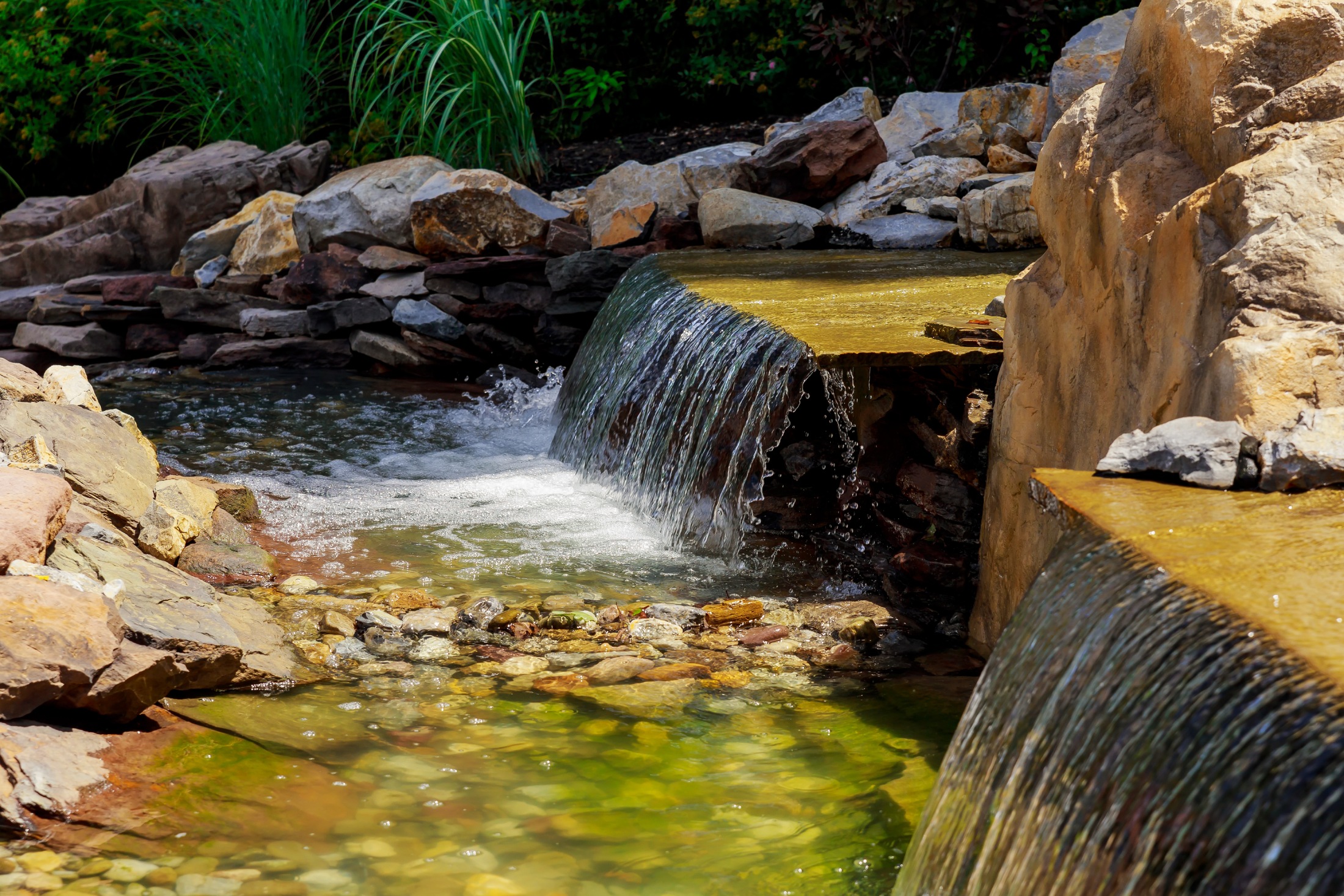
Integrating Water Features into Modern Hardscape Design
Pondless waterfalls, fountains, and natural rock installations explained
Water features integrated into hardscape design add ambient sound, visual movement, and a level of sensory richness that stone and fire alone can’t produce. Pondless waterfalls, sculptural fountains, and natural rock installations all require intentional placement within the surrounding patio pavers and structural elements to look like they belong rather than got added later. When the engineering is done right and the materials are coordinated, a water feature stops being an accessory and becomes the reason the whole backyard works. This article covers the design, structural, and drainage considerations that determine whether a water feature performs beautifully long term.
Walk into a backyard with a well-placed water feature and you feel the difference before you even register what you’re looking at. The sound hits first. Then the movement. Then you realize the whole space feels calmer and more alive at the same time, which shouldn’t make sense but does. That’s what water does. Stone can’t do it. Fire gets close but it’s a different feeling entirely.
Moving water in a hardscape is its own category, and when it’s done right, it’s the thing guests talk about on the way home. The way it gets done right is integration. Pondless waterfalls and sculptural fountains that are woven directly into the surrounding patio pavers look like they belong there. A water feature sitting on top of a patio like it was delivered and never fully installed looks like exactly that, and the difference in how those two things read is enormous.
Natural rock installations blur the line between built and natural most effectively. Pair them with bluestone pavers and the organic texture of the stone and the movement of the water just make sense together. Add a backyard retaining wall with some elevation change behind the feature and suddenly you’ve got water cascading down through levels in a way that looks less like a product and more like something the landscape produced on its own. Contemporary settings want something different: cleaner lines, concrete retaining walls behind linear fountains, tight geometry everywhere. Either way the principle is the same: the water should look like it came from the design, not like it got added to it.
| Water Feature Type | Best Setting | Maintenance Level | Key Benefit |
| Pondless waterfall | Naturalistic, stone-heavy designs | Low | Sound without standing water upkeep |
| Sculptural fountain | Contemporary hardscape layouts | Low to moderate | Strong visual focal point |
| Natural rock installation | Organic, tiered environments | Low | Blends seamlessly with landscape |
| Traditional pond | Large, dedicated garden areas | Higher | Full ecosystem, fish compatible |
| Linear wall fountain | Modern, minimal patio designs | Low | Clean, architectural presence |
How water elements enhance relaxation and property value
Moving water does something practical that most homeowners don’t think about until they experience it: it manages ambient sound. A fountain or pondless waterfall absorbs neighborhood noise, road traffic, and whatever’s happening over the fence, replacing it with something that actively makes the space more enjoyable to be in. Paired with a backyard fire pit or outdoor fireplace, it creates a layered sensory environment that draws people outside and keeps them there. Coordinated with the surrounding patio pavers and hardscape finishes, it reads as part of a deliberate plan rather than a splurge someone added on.
Put a water feature near a backyard fire pit and you’ve got something genuinely special. Fire and water together create a sensory contrast that draws people in and keeps them there. Warm light, cool sound, movement in two completely different forms. It elevates the whole atmosphere of the space well beyond what either element achieves on its own.
Keeping the materials consistent is what makes all of it feel valuable rather than expensive. Coordinating the surfaces across pavers for patio areas and pavers for walkways means the water element reads as part of a plan. Carry that coordination through to an outdoor fireplace on the same patio and the environment starts to feel layered in a way that genuinely encourages people to settle in and stay.
For entertaining, water in the mix changes the whole feel of the space. Guests gravitate toward it naturally. Put it within the orbit of outdoor patio kitchens and the dining experience picks up an ambient quality that people notice even if they can’t name it. Surround it with brick patio pavers that tie back to the home and the whole yard looks considered rather than assembled.
Structural and drainage planning for seamless integration
What’s under the ground determines whether a water feature performs beautifully for twenty years or starts creating problems after a few seasons. Proper excavation, base preparation, and drainage routing aren’t optional steps. They’re the engineering that makes everything visible above ground work the way it’s supposed to. When moisture management around retaining elements isn’t handled correctly, it undermines the structural integrity of the installation over time. Professional planning earns its cost back here faster than almost anywhere else in a hardscape project.
Drainage gets complicated fast when water is introduced near vertical structures. Moisture management behind retaining components has to be handled correctly or it undermines the integrity of the installation over time. The feature has to sit within the broader patio designs with pavers in a way where water flow stays where it’s supposed to and doesn’t work into adjacent surfaces.
Overhead structure pulls the composition together. An aluminum pergola near a fountain provides shade for the seating that naturally forms around a water feature and frames the visual focal point so the eye finds it without being forced to. A custom pergola adds a layer of architectural definition that connects the water element to the surrounding stone and seating zones.
When all of those pieces are working together, the space stops being a patio with a water feature and becomes a single cohesive outdoor environment where every element supports every other one. Getting water right in a hardscape requires equal commitment to the design side and the engineering side. Shortchange either one and it shows. Get both right and what you’ve built isn’t just a feature. It’s the reason the whole backyard works.
Frequently Asked Questions
Are pondless waterfalls easier to maintain than traditional ponds?
Yes, by a significant margin. No standing water means no algae cycles, no fish maintenance, no liner monitoring. The circulation components stay easy to access and clearing out debris takes minutes instead of an afternoon. For most homeowners, pondless systems deliver everything they actually want from a water feature without the upkeep they don’t.
Can water features be added to an existing patio?
In a lot of cases, yes. Space and drainage are the two main variables. If there’s room to integrate the feature properly and the existing drainage can be adjusted to handle it, it’s usually doable. A professional assessment tells you quickly what’s realistic and what adjustments the site actually needs.
Do water elements attract insects?
Moving water and standing water are completely different situations. Mosquitoes need stagnant conditions. A properly circulating fountain or waterfall doesn’t give them that. Keep the pump running consistently, handle basic upkeep, and insects won’t be a problem worth worrying about.
How close can a fountain be installed to the home?
It depends on the specific property. Grading, splash patterns, and structural considerations all factor in differently site to site. What matters most is that the drainage plan moves moisture away from the foundation rather than toward it. That gets worked out during design and planning, not after installation.
Will adding a water feature increase property value?
A well-designed one consistently improves how a property is perceived. Buyers notice it, remember it, and respond to it in a way they don’t respond to most other features. A water feature that looks like it belongs in the design rather than an afterthought makes a real impression on how the overall property is valued.